

BOARDS MADE IN AUSTRIA
Developed in Munich, made in Austria: For our new snowboards, the CLEW Altair and CLEW Polaris, we deliberately chose a production partner who shares our commitment to quality, precision, and regional manufacturing. That’s why our new boards are being made at Keil Ski, south of Salzburg, Austria. What may look like a finished snowboard at first glance is actually the result of countless individual steps — and a surprising amount of hands-on work. In our latest video, we take you behind the scenes and show you how our boards come together, from the first pieces of wood to the final finish.
Made in Austria — By Choice
For us, regional production is more than just a label. We want to know where our products are made and how they are manufactured. The CLEW Altair and CLEW Polaris were developed in Munich and manufactured in Austria at Keil Ski. Keil Ski uses carefully selected European materials, with a large proportion of the materials sourced from within a radius of around 500 kilometers. Shorter supply chains don’t just give us greater control over production. They also allow us to work closely with our manufacturing partners and gain a much better understanding of every step that goes into building a snowboard. And that’s exactly what we wanted to see for ourselves
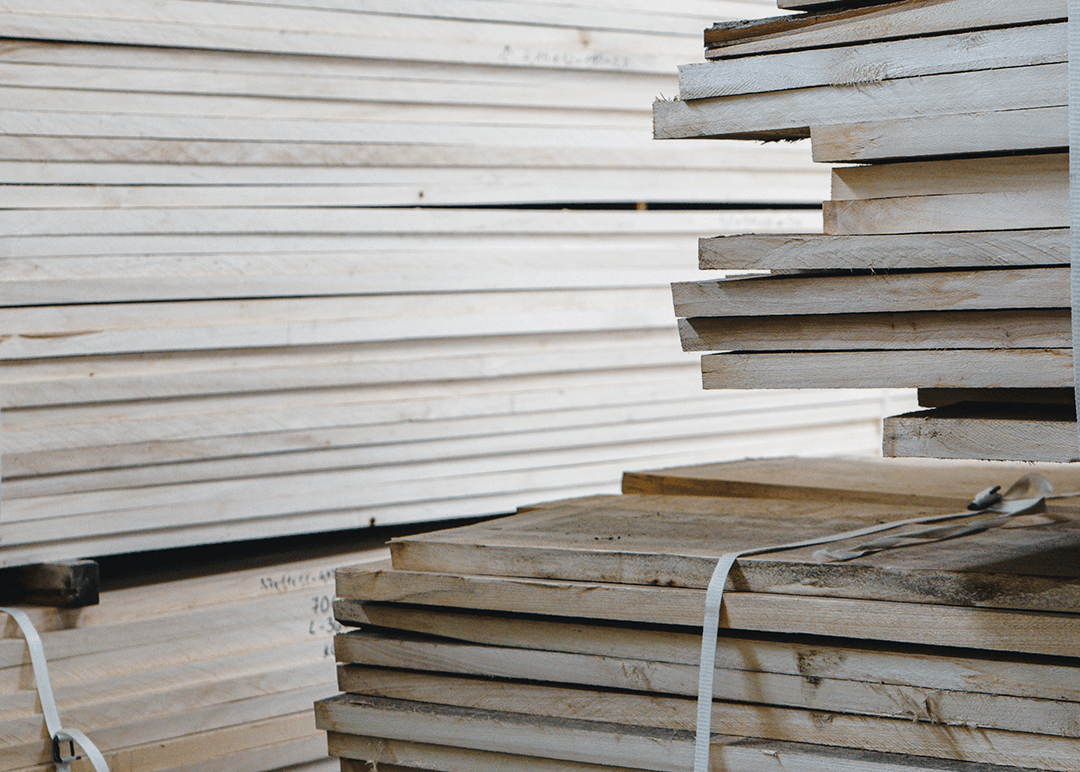
It All Starts With the Wood Core
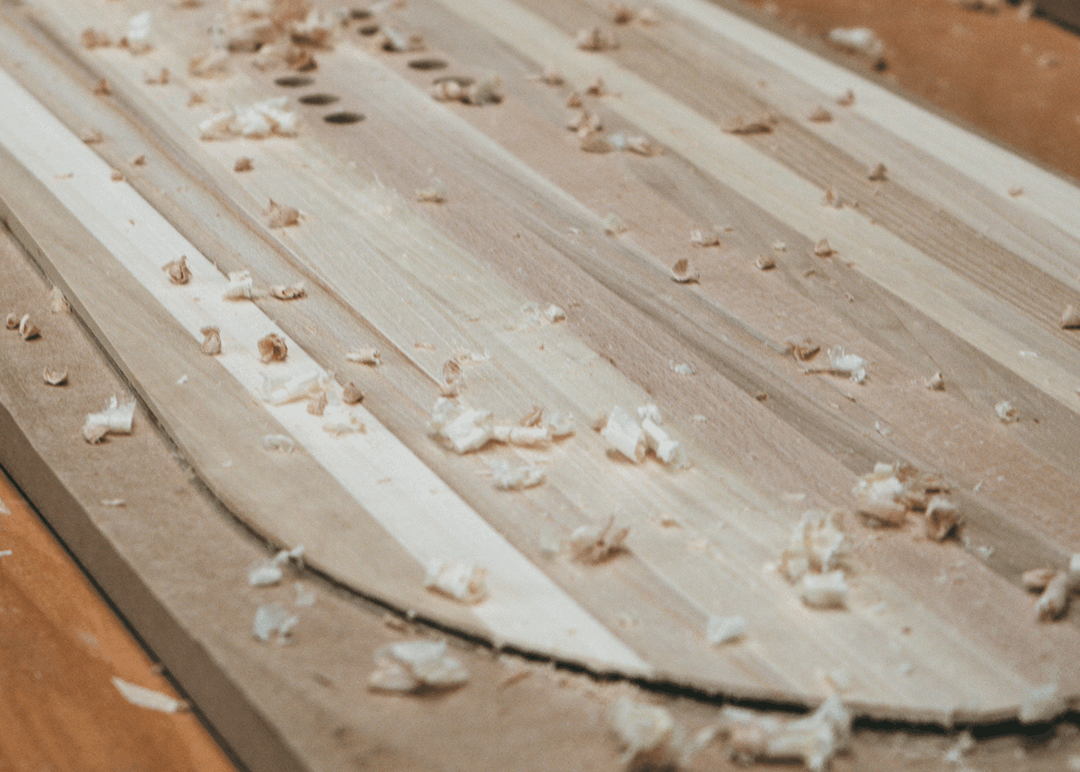
The heart of a snowboard is its wood core. It plays a major role in determining how a board feels on the mountain — how directly it responds, how stable it remains at higher speeds, and how much pop and flex it delivers. Choosing the right wood isn’t simply about finding the lightest material possible. It’s about combining different properties to achieve the desired balance of weight, flex, and stability. Both boards feature a carefully tuned wood core made from poplar, paulownia, and beech. The wood is first prepared, cut, and planed. Larger blocks are then processed into the individual components needed for the core. Even the wood left over from the process doesn’t simply go to waste — it can be reused for other purposes. This is where you start to see just how much thought goes into a snowboard.
Every Layer Has a Purpose
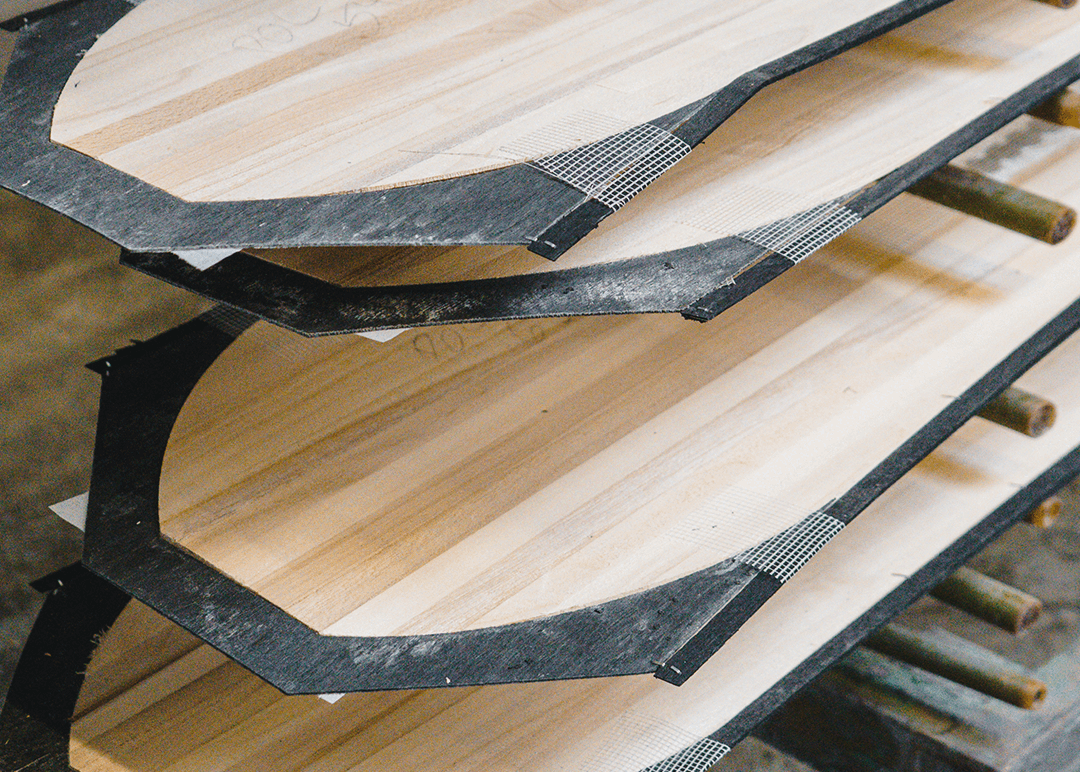
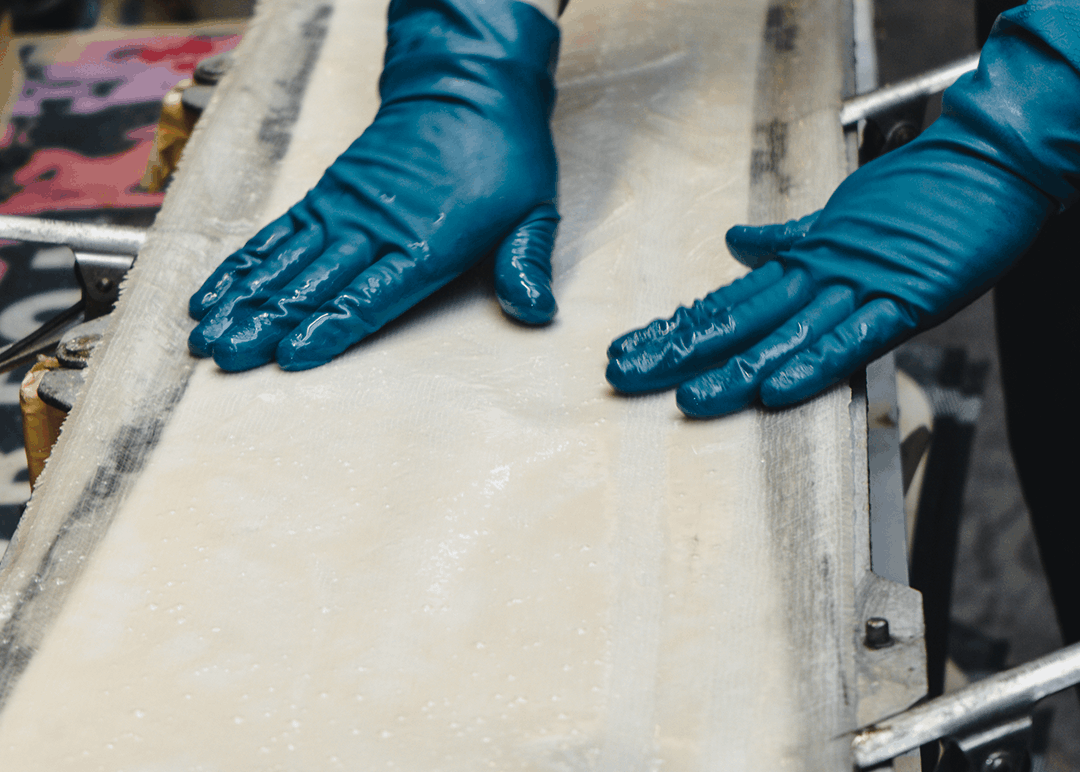
The wood core is only one part of the construction. A snowboard consists of multiple layers, each contributing to the final riding characteristics of the board. Both boards use triaxial fiberglass, which provides precision, stability, and pop. The construction also features ABS sidewalls, designed to provide direct power transfer. This connection between the rider, the board, and the snow is particularly important when riding on edge. On the underside, a sintered P-Tex base is used for speed. And running all the way around the board is a 360° steel edge, providing durability and allowing for precise edge control. Every layer serves a specific purpose. It’s the combination of all these individual components that ultimately creates the riding feel of the finished board.
The Press Gives the Board Its Shape
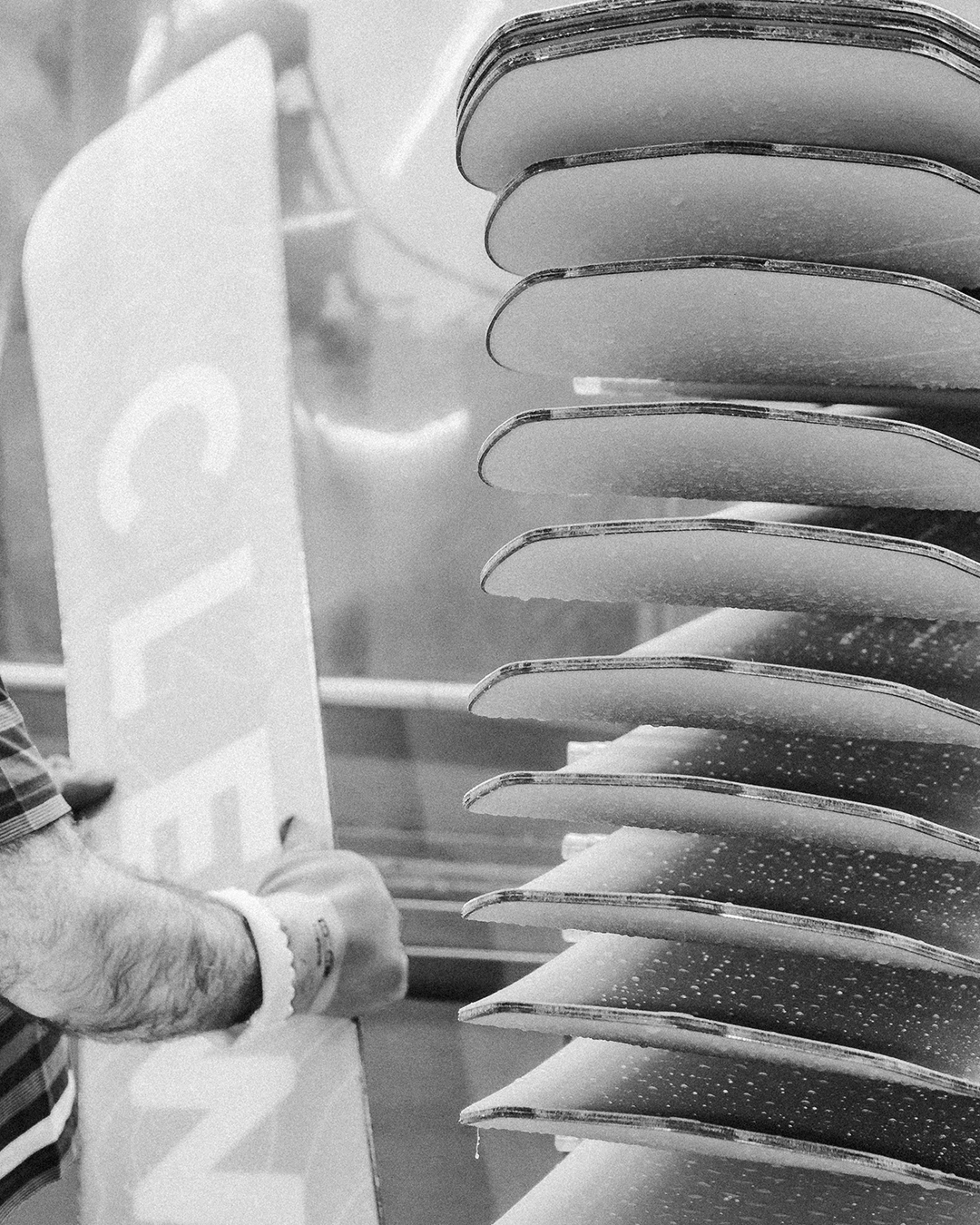
Once all the individual materials have been prepared, things get exciting: the different layers are assembled and placed into the press. This is where the individual components gradually become a snowboard. The press is programmed specifically for each model. The length, shape, and desired camber profile are taken into account. This is where the final geometry of the board starts to take shape. Heat and pressure are used during the pressing process. The epoxy cures under controlled conditions, bonding the individual layers together into one solid construction. The entire pressing process takes around 15 minutes, with the board heated for approximately 13 of those minutes. Afterwards, the board is carefully cooled and can move on to the next stage of production. The epoxy continues to fully cure after the pressing process.
From Rough Shape to Finished Board
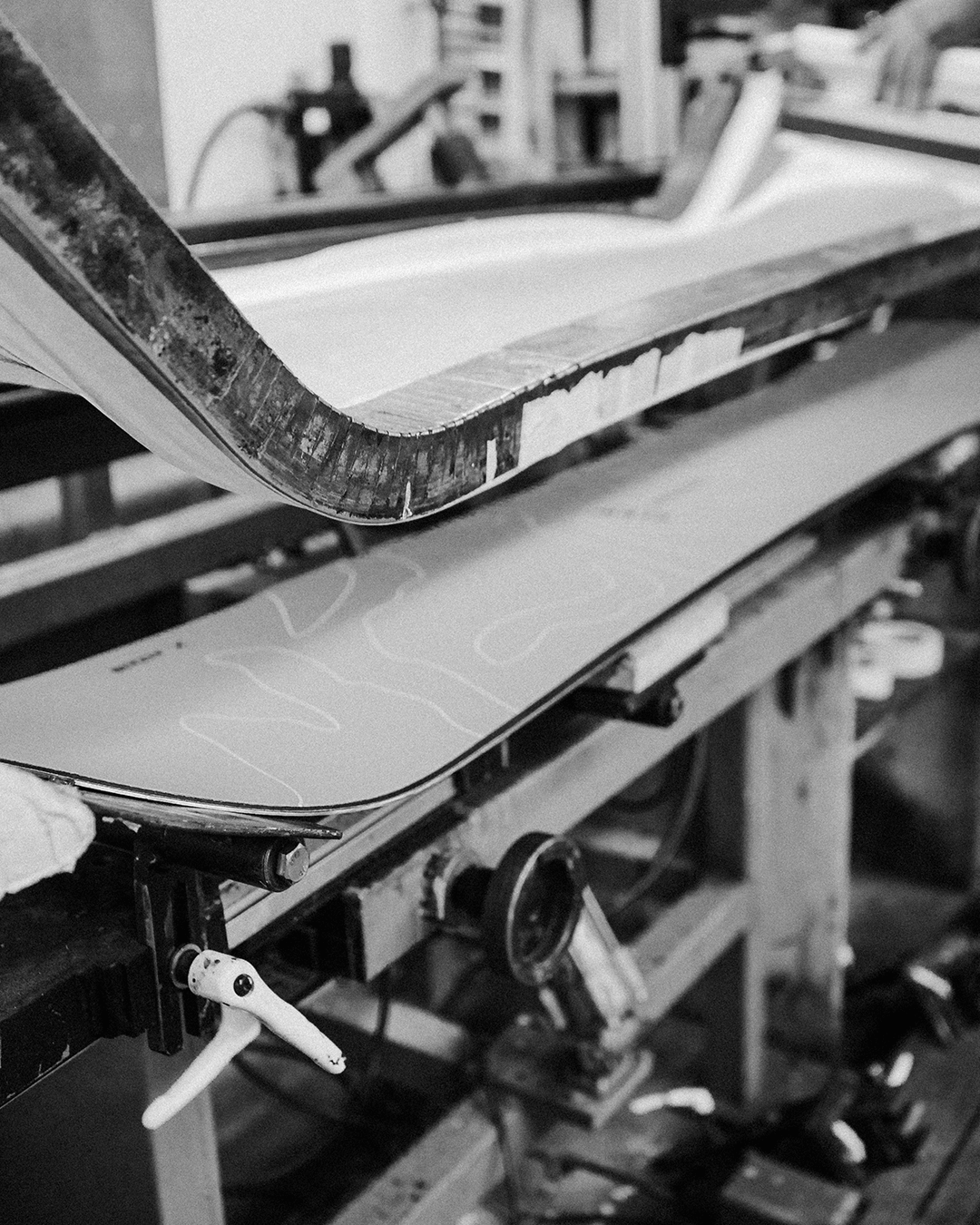
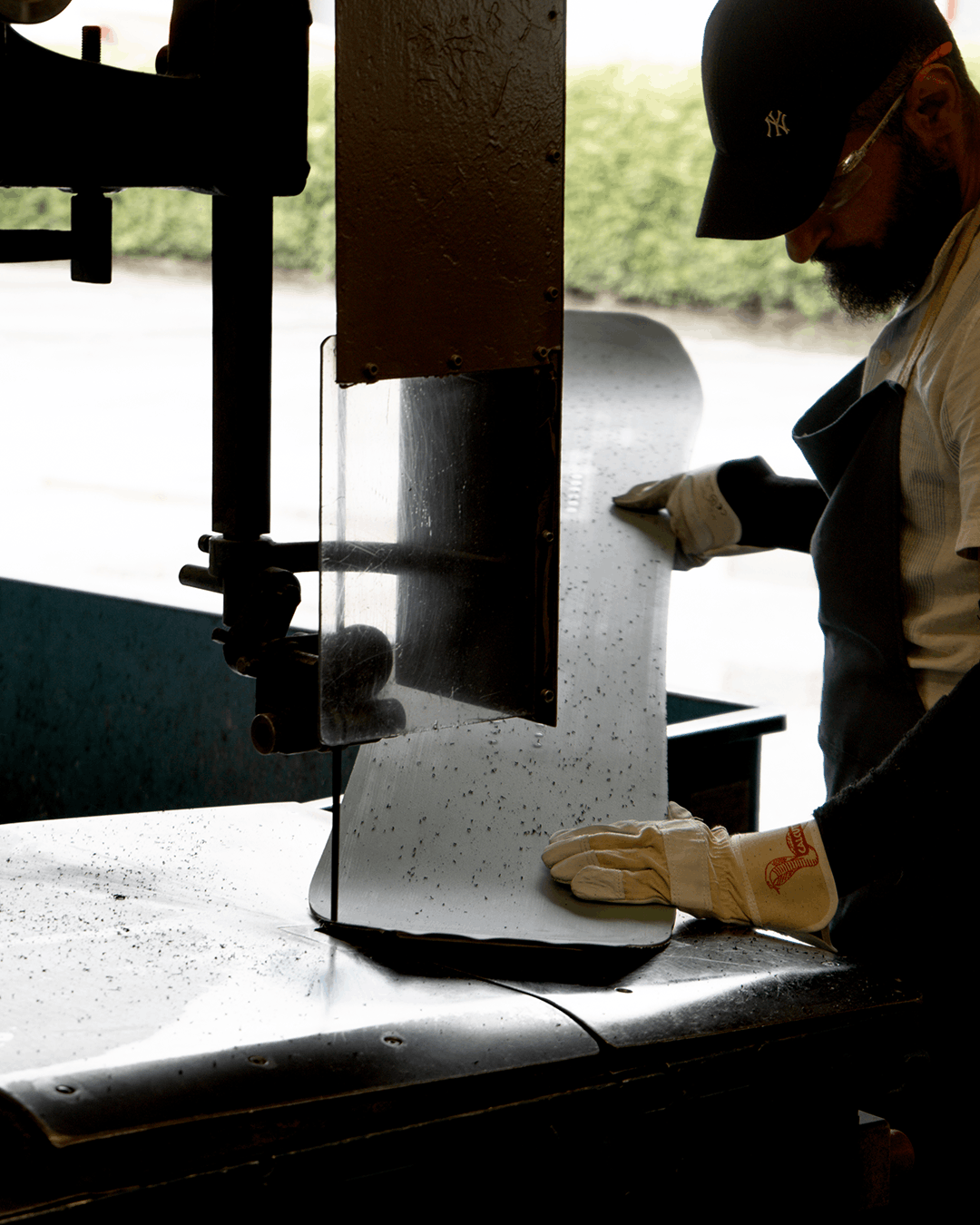
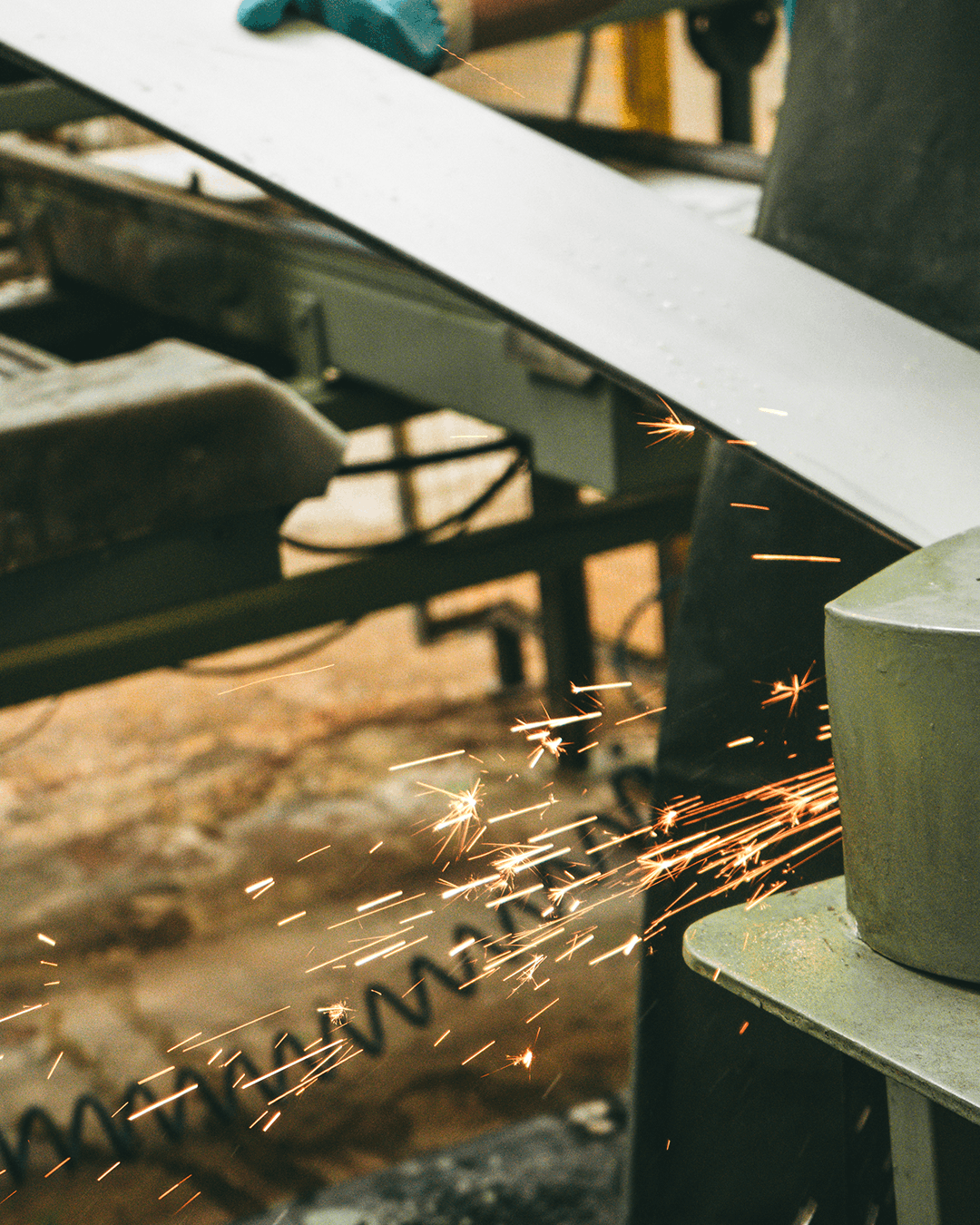
After pressing, the board is still a long way from looking like the snowboard you know from the shop. The base is initially rough and needs to be worked step by step. The edges and sidewalls also go through several stages of processing. First, excess material is removed and the surface is ground flat. The board then goes through progressively finer grinding processes. Some of this work is done by machine, while other steps are completed by hand. It’s especially during the final stages that you really see how much craftsmanship goes into a high-quality snowboard. The edges are precisely shaped, the surfaces are smoothed, and even the smallest imperfections and residues are removed. After individual grinding and milling steps, the board repeatedly goes through quality control.
Quality Isn’t Just Made by Machines
One of the things that impressed us most during our visit was just how much hands-on work goes into each board, despite the use of highly precise machinery. A board doesn’t automatically move on to the next stage after every production step. During quality control, the surface, edges, and base are carefully inspected. Boards that still require additional work are sent back for further processing and checked again afterwards. It’s this combination of precise machine work and skilled craftsmanship that makes the production at Keil Ski so special.
The Final Details
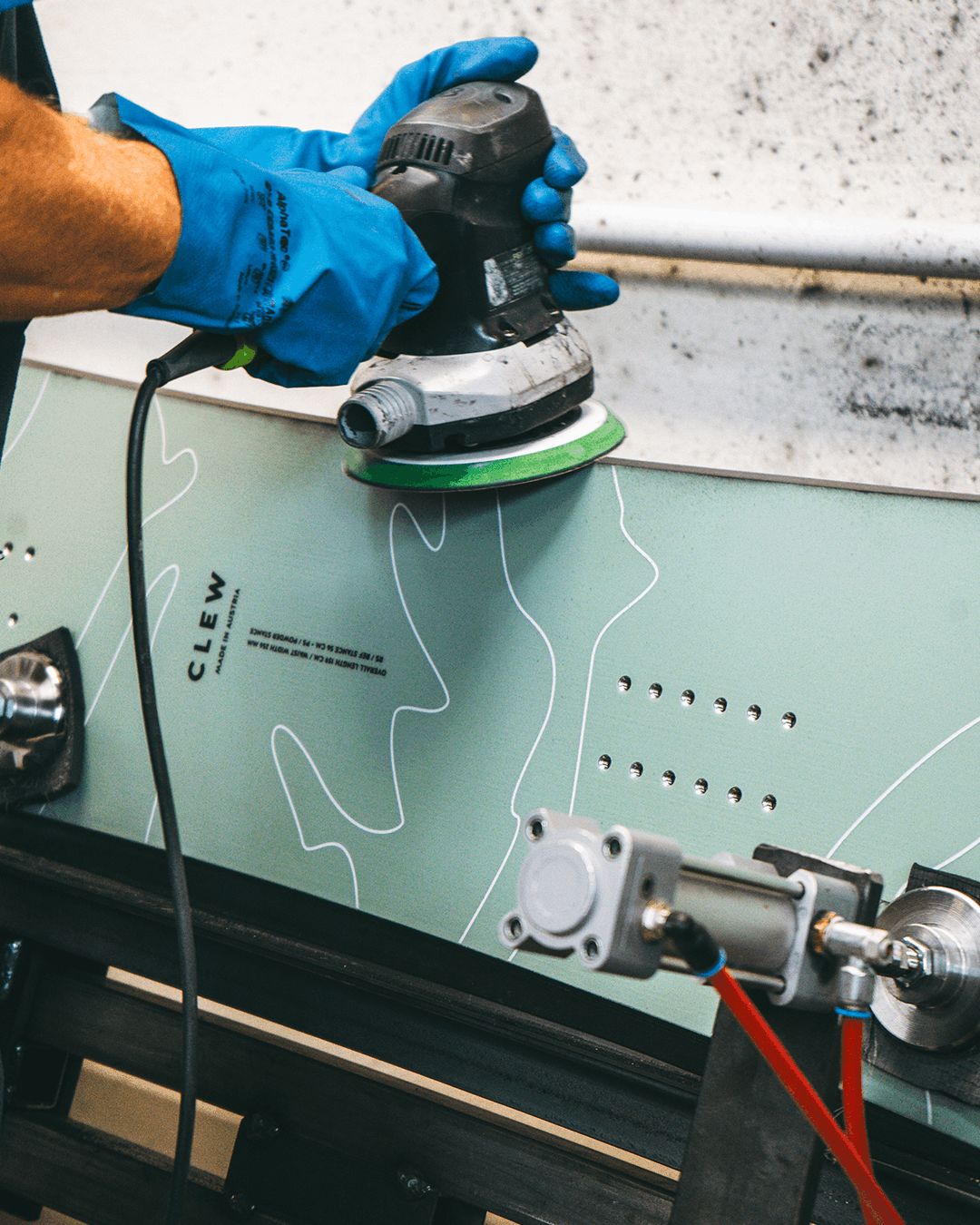
Towards the end of the production process, it all comes down to the details. The base is progressively ground and polished to achieve the desired finish. Even the smallest traces of fiberglass have to be removed. The surface needs to be smooth and consistent so that the board is ready to deliver the performance it was designed for. Only after these final steps does the board truly start to look like the finished product. Then comes one of the most visible steps: the screen printing. Here, precision matters once again. Position, spacing, and pressure all have to be just right to ensure that the graphics are applied cleanly and accurately. And then, finally, it’s done. Wood, fiberglass, plastic, steel, epoxy, countless production steps, and a lot of hands-on craftsmanship have come together to create a finished CLEW snowboard.
Developed in Munich. Made in Austria. Ready for the Mountain.
The production of our new boards shows what Made in Austria really means to us. It’s not just about where a product is manufactured. It’s about shorter supply chains, close collaboration, carefully selected materials, craftsmanship, and being able to understand and follow the entire process from start to finish.
The CLEW Altair and CLEW Polaris combine our development in Munich with manufacturing at Keil Ski in Austria. European materials, a carefully tuned wood core, and a construction in which every individual layer serves a specific purpose. From the first piece of wood to the final polish, every step contributes to a board built for what ultimately matters most. Getting out on the mountain.
Read more
Snowboarding lives in nature. In cold winters, snow-covered mountains, and the opportunity to spend time outdoors. This connection to the mountains is an essential part of what makes the sport what...
What happens when you ride a Step-In system for an entire season in all kinds of conditions? Dan, CLEW team rider, spent around 100 days testing the CLEW Independence – from powder and backcountry ...